

Hurricane Downtime Reports
Quantify hurricane impacts on construction projects. Month‑by‑month comparatives vs 1‑in‑10 thresholds and long‑term averages with clear anomaly calls, plus daily detail for wind, rain and more.
- Evidence for EOT, outage analysis and loss‑of‑productivity claims
- Monthly vs 1‑in‑10 and Long‑Term Average with anomaly assessment
- Daily detail across 80+ variables (wind/gusts, rainfall, surge proxies, etc.)
 Trusted by tier‑1 contractors & operators









Hurricane risk — quantified and defensible
Objective comparatives for hurricane months and daily detail for winds, rain and outages. Designed for planners, contractors and project teams.
Target September–October peaks with month‑specific comparatives and anomaly calls.
Atlantic, Gulf, Caribbean and Pacific coverage on a ~10×10 km grid (land & sea) from ERA‑5 / ERA‑5 Land.
Audit‑ready evidence for EOT, outages and insurance — no planning‑tool export required.
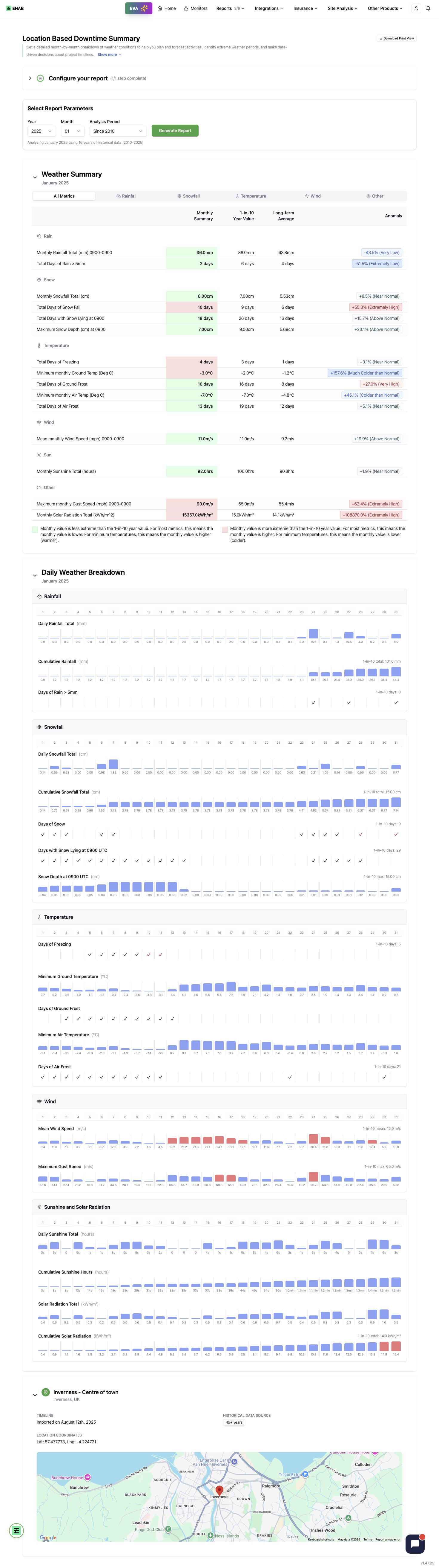
Monthly hurricane comparatives (1‑in‑10 and LTA) with daily wind/gust/rain detail across 80+ variables, plus location map. Use for EOT, outage analysis and insurance documentation.
- • Select landfall‑adjacent months or operational windows
- • Compare observed month vs 1‑in‑10 and LTA to flag exceptional conditions
- • Use daily wind/gust/rain to evidence stoppage days and outages
- • Attach to EOT submissions, outage reviews, insurance and board packs
For Contractors & Planners (EOT)
Evidence unusually adverse weather against contract terms with monthly and daily clarity. Align stakeholders on facts and avoid subjective debates.
- ✓ Assess entitlement using 1‑in‑10 thresholds (NEC) and Long‑Term Averages (JCT)
- ✓ Daily records across 80+ variables (rain, frost, wind, sunshine, etc.) to pinpoint constraints by date
- ✓ Attach an authoritative PDF to delay notices and EOT submissions
- ✓ Global coverage on ~10×10 km grid (land & sea) — reliable anywhere you build
Contractors using detailed weather evidence see materially higher success rates in EOT claims. Stop relying on memory or site photos — bring statistical proof.
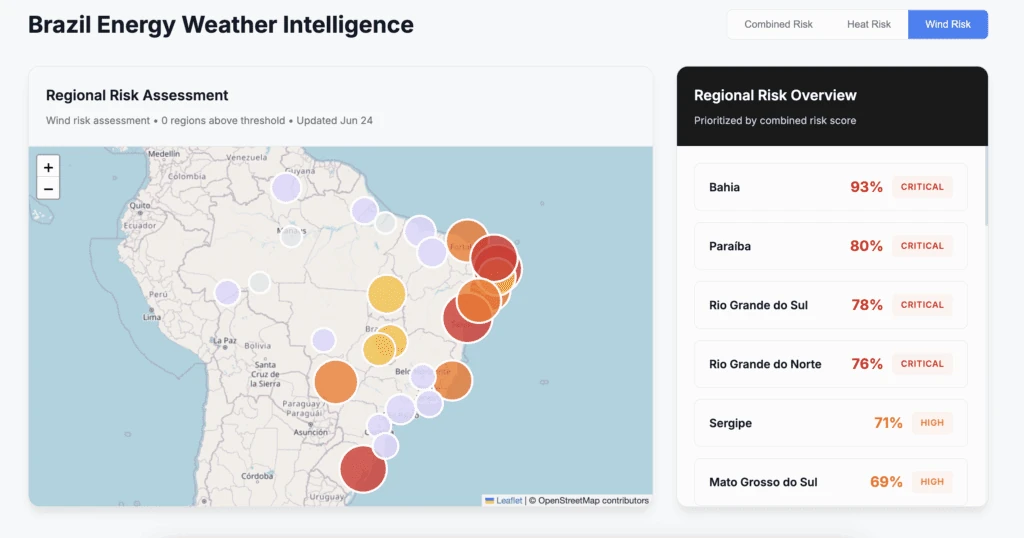
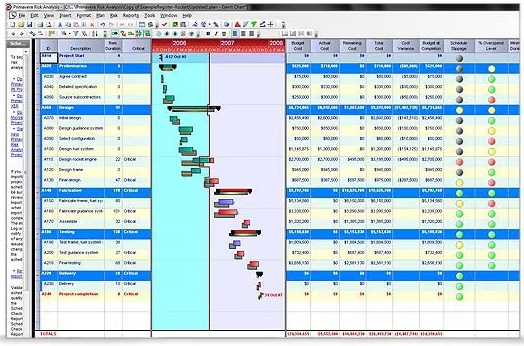
For Claims & Disputes Teams
Neutral, data‑driven evidence that de‑escalates conflict and accelerates fair outcomes.
- ✓ Objective comparatives that make entitlement straightforward, not subjective
- ✓ Daily timelines for causation: link specific non‑working days to weather
- ✓ Consistent format aligned to NEC/JCT expectations — easy to review
- ✓ Supports adjudication, arbitration and settlements with credible facts
Transparent evidence prevents costly disputes and preserves relationships. Everyone sees the same numbers.
For Planners & Schedulers (Baseline & Tender)
Use multi‑decade climate statistics to set realistic weather allowances, choose start windows, and build evidence‑based programmes.
- ✓Baseline non‑working weather days by month for your site
- ✓Evidence‑backed TRA at bid stage; no guesswork
- ✓Seasonality: sequence weather‑sensitive works into better windows
- ✓What‑if comparisons for alternative start dates
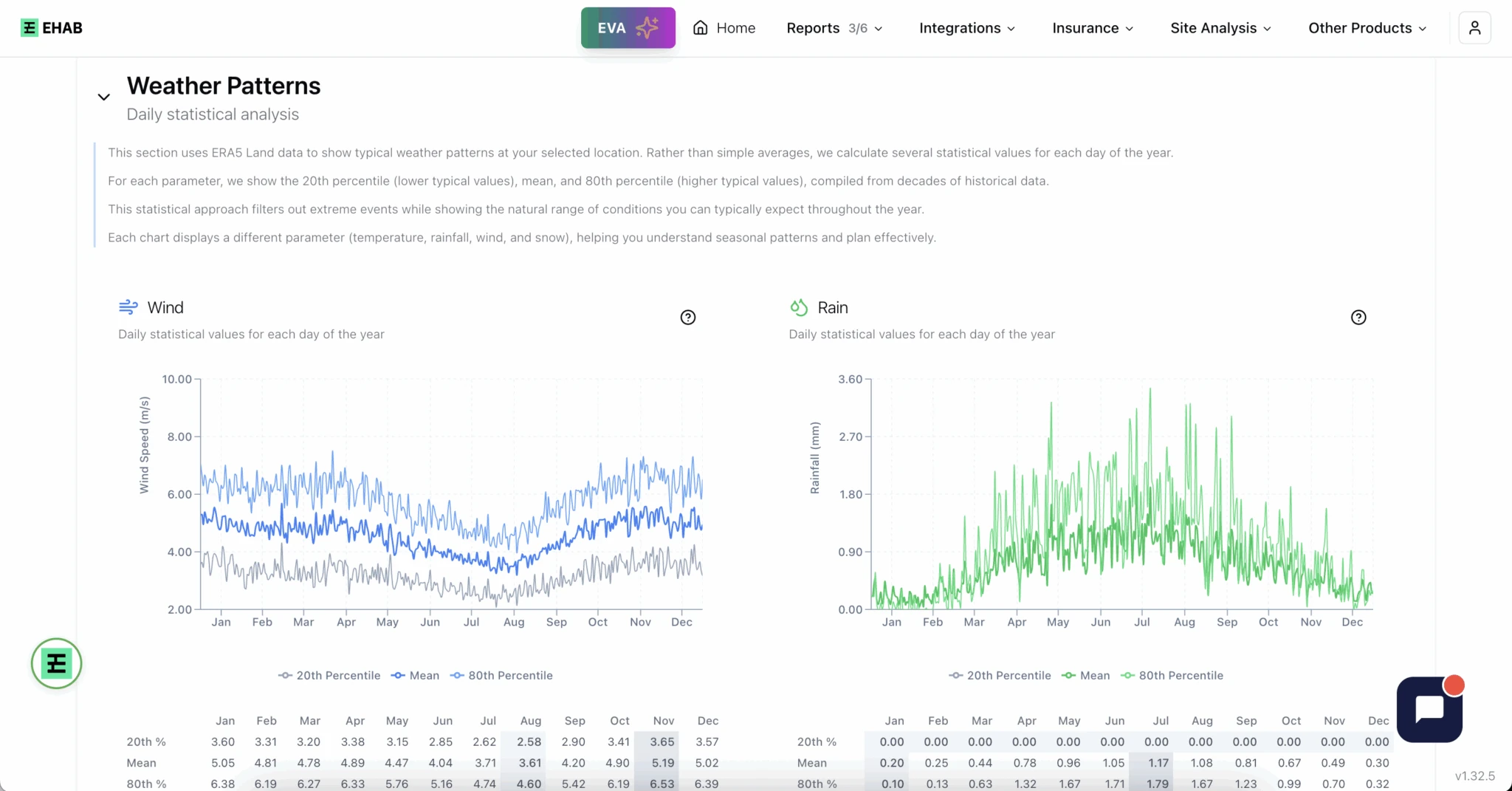
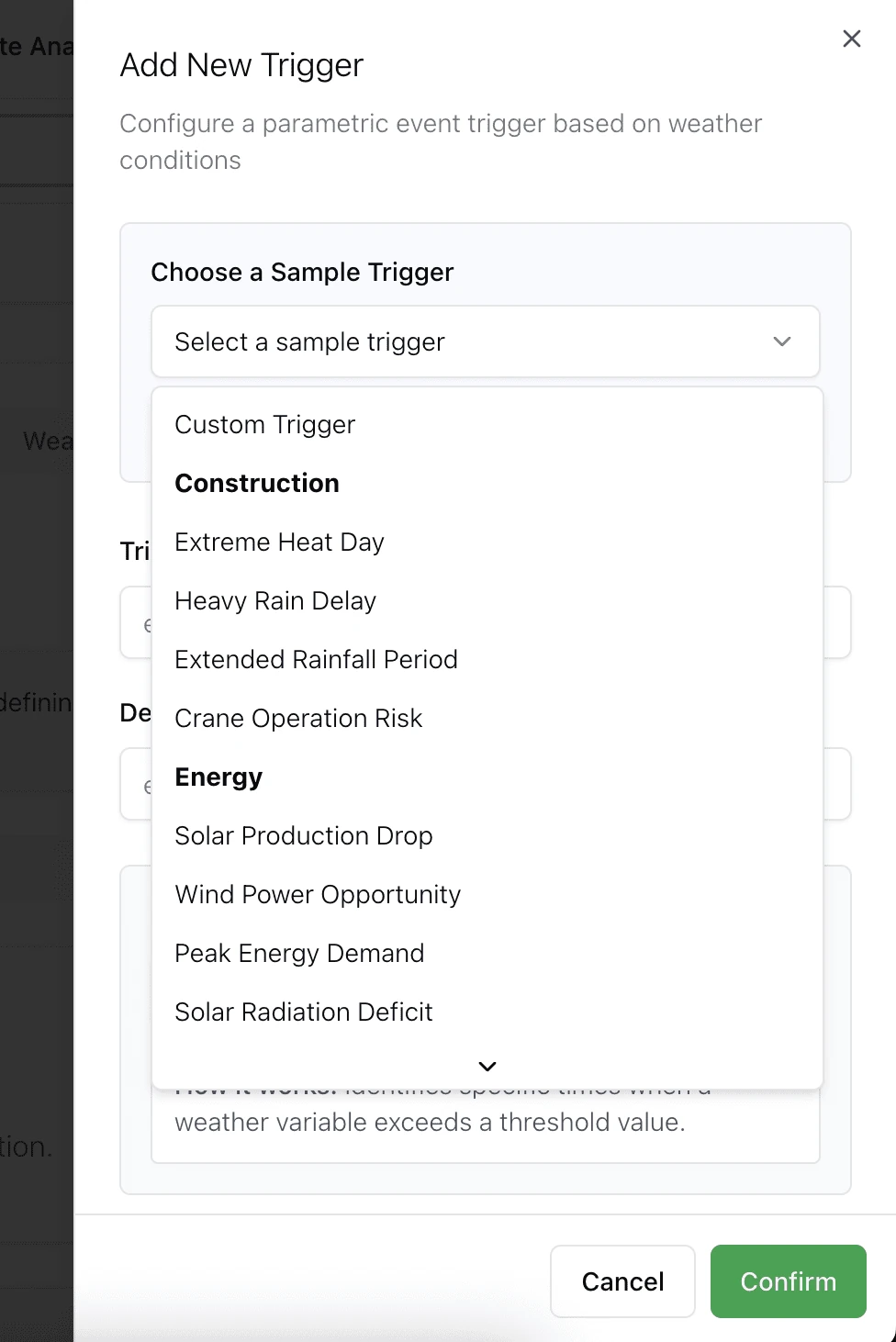
For Owners & Insurers (Risk & Contingency)
Quantify expected downtime and extremes to size contingencies, price risk, and document decisions with a clear audit trail.
- ✓Expected loss‑of‑working‑day ranges per season and site
- ✓Contingency and reserve sizing supported by history
- ✓Portfolio comparables and like‑for‑like benchmarking
- ✓Clear documentation for governance, audit and financing
Why our downtime reports
Built on authoritative data with a modern delivery experience.
- ✓Global ERA‑5 / ERA‑5 Land coverage — land & maritime
- ✓80+ weather variables; choose what matters for your works
- ✓Flexible baselines (10/20/30+ yrs) to reflect local standards
- ✓Instant delivery when thresholds are exceeded — never miss notice windows
- ✓Clear anomaly calls: Above/Below/Near normal at a glance
- ✓Daily detail for rainfall, snowfall, temperature, wind, sunshine
- ✓Audit‑ready PDFs; easy to attach to notices and claims
- ✓Backed by decades of observations and reanalysis science
Beyond construction
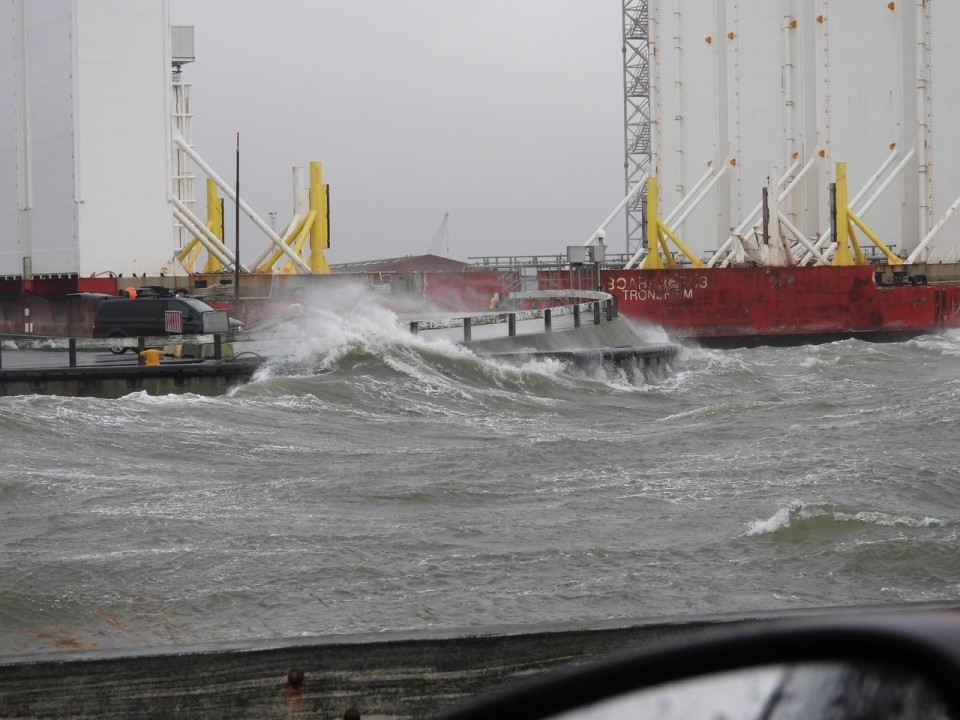
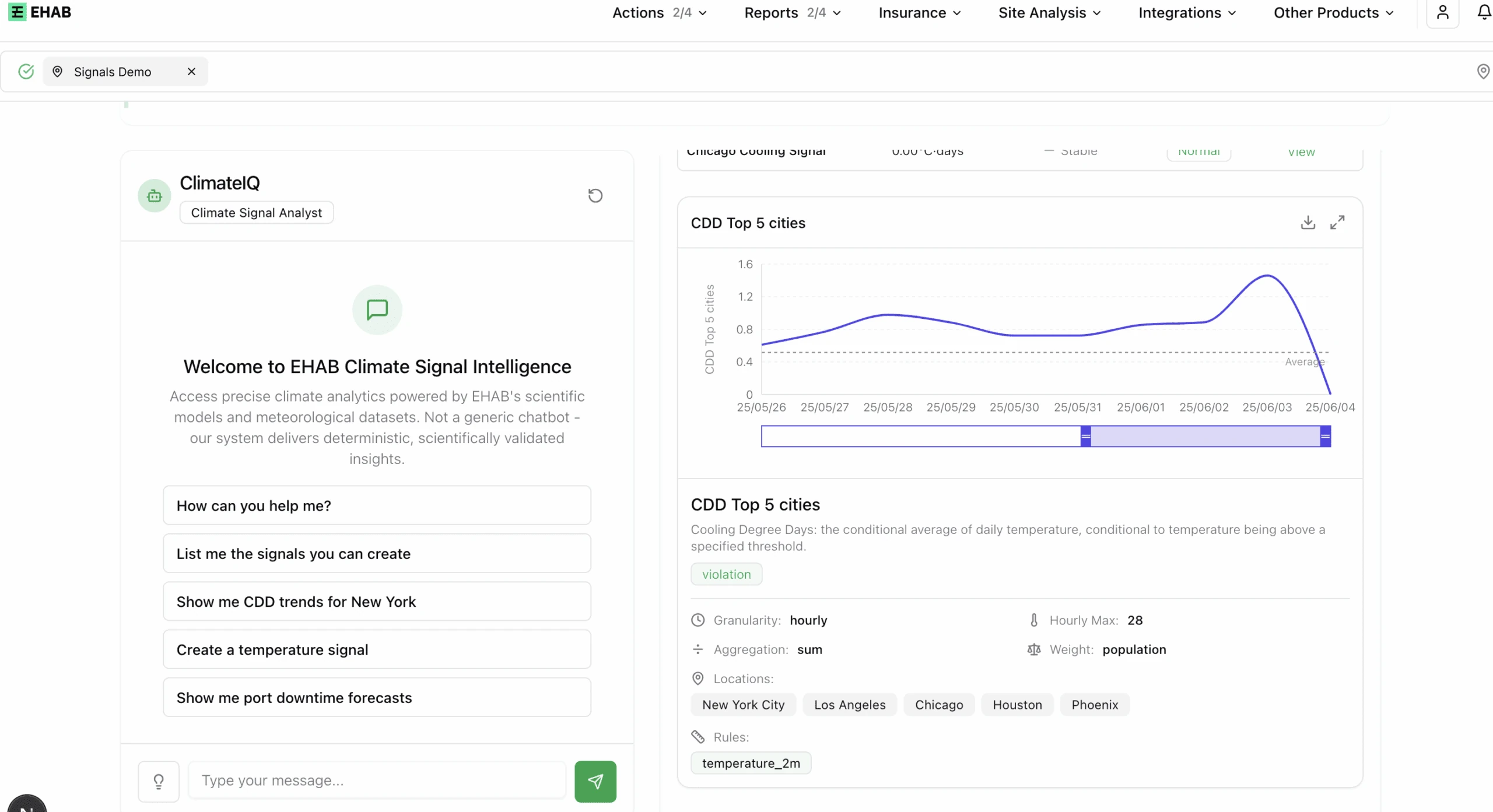
Any weather‑exposed operation can turn uncertainty into measurable, manageable risk.


What they say
"EHAB taps into weather data to provide consistent downtime analysis. It's a prime example of new tech we're using at BAM."

"We use EHAB in QSRA sessions to model weather risk precisely, giving greater assurance on milestones and helping explore ways to de‑risk."

"Integral to our risk management, enhancing accuracy, saving days of manual analysis, and letting us rehearse projects before work begins."

Peak hurricane season is here — are you ready?
Get site‑specific hurricane downtime reports for the months you need. Evidence today, resilience tomorrow.
Sources
Hurricane frequency & severity▾
Outages, damages & costs▾
Project & operations impacts▾
What is a Location‑Based Downtime Report?▾
Which contracts/clauses does it support?▾
What parameters are included?▾
How are 1‑in‑10 and long‑term averages calculated?▾
How does this help with EOT claims?▾
Is coverage global?▾
How fast can I get a report?▾
What period does one report cover?▾
Can I use it for planning and tendering?▾
Do you integrate with my systems?▾
Which format do I receive?▾
Contact us
Want specific months or guidance on NEC/JCT language? Drop your details and we'll get back to you.